


Mouth Tape vs Chin Strap for Mouth Breathing: Which Is Better?
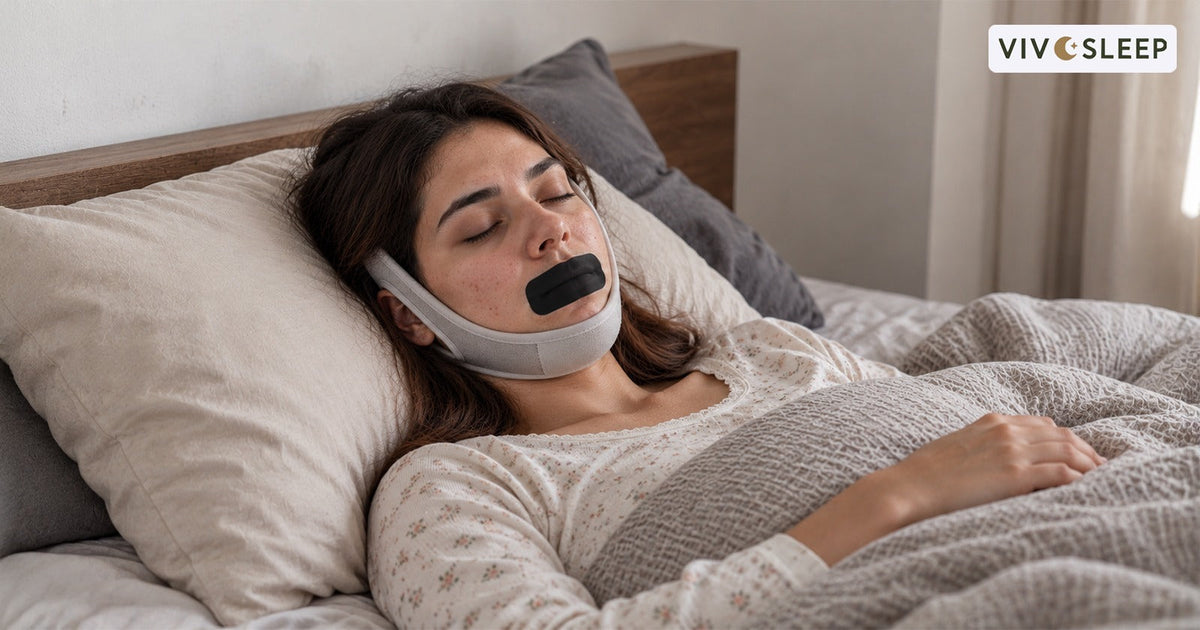
Quick answer: If your nose is clear and your mouth simply falls open, mouth tape gives a more complete lip seal, while a chin strap avoids adhesive. If you use nasal CPAP, ask your sleep clinic about a chin strap. If your nose is blocked or you snore with gasping, use neither and get checked.
You wake up with a dry mouth again. You slept a full night, but your lips feel cracked, your throat is scratchy, and your partner mentions, not for the first time, that you sleep with your mouth open.
Start searching for a fix and two products come up almost immediately: mouth tape and chin straps. Both are meant to keep your mouth closed while you sleep, but they go about it differently. Mouth tape holds your lips together with a gentle adhesive. A chin strap is a soft band that wraps around your head and supports your jaw from underneath.
So which one is better? Honestly, it depends on why your mouth opens in the first place. If your nose is clear and your jaw simply relaxes open at night, that is one situation. If your mouth opens because your nose is blocked, that is a very different one, and neither product should be your first move.
A 2025 systematic review of mouth taping found limited evidence that it helps and raised safety questions for some users. Keep that in mind as you read. This guide walks through how each product works, how they feel to wear, what the research says, and how to tell which one, if either, makes sense for you.
Mouth Tape vs Chin Strap: Key Differences at a Glance

The core difference is where the support sits. Mouth tape works at the lips. A chin strap works at the jaw. Everything else, from comfort to who should avoid each one, follows from that.
One thing both products have in common: neither opens a blocked nose. If you can't breathe comfortably through your nose, the right next step is finding out why, not choosing between these two.
How Mouth Tape Works During Sleep
Mouth tape does one simple job: it keeps your lips together while you sleep so you are nudged toward breathing through your nose. Products vary in shape. Some cover the whole mouth, others are a small strip across the center of the lips, and some sit around the lips rather than over them. The idea is the same in each case.
Why People Try It
Most people reach for mouth tape for one of two reasons. Either they keep waking up with a dry mouth, or they've heard that nasal breathing improves sleep quality and want to encourage it. Both are understandable. The catch is that tape only holds the lips closed. It does nothing about the reason your mouth was opening, and if that reason is a stuffy nose, you've just removed your backup airway.
What Mouth Tape Cannot Do
Tape cannot clear a blocked nose, fix a deviated septum, shrink swollen nasal tissue, or treat a sleep-related breathing disorder. It is not a recognized treatment for obstructive sleep apnea. If your nose tends to block up overnight, taping your mouth can leave you struggling for air or pulling the tape off half-asleep, which is neither restful nor safe.
How a Chin Strap Works for Mouth Breathing
A sleep chin strap is an adjustable fabric band that sits under your chin and loops over the top of your head. Instead of sealing the lips, it gives the lower jaw a little upward support so it is less likely to drop open as you relax into deeper sleep.
Jaw Support Is Not a Lip Seal
This is the part people miss. Holding the jaw up does not guarantee the lips stay together. Plenty of people wear a chin strap and still breathe through a small gap between their lips. If a strap is doing very little for you, that may be why.
Fit and Tightness
Most straps are adjustable, and getting the fit right matters. Too loose and it slides off in the night. Too tight and you wake up with a sore jaw, pressure marks, or a headache. Cranking the strap tighter to force your mouth shut is never the answer. If it only works when it hurts, it isn't working.
Chin Straps and CPAP
This is where chin straps have the clearest use. If you use a nasal CPAP mask and your mouth falls open, air escapes through your mouth and the therapy pressure drops. Sleep clinics recommend a chin strap to manage that leak. The strap supports the CPAP; it doesn't replace it, and it doesn't treat sleep apnea on its own. Talk to your sleep clinic before adding one, because a different mask or a humidifier adjustment might solve the leak more comfortably.
Mouth Tape or Chin Strap: Which Should You Choose?

The honest answer is that the product matters less than the reason behind your mouth breathing. Work through the situations below and you'll usually find your answer.
Your Nose Is Clear and Your Jaw Just Relaxes Open
If you breathe easily through your nose during the day and at night, and your mouth simply drifts open once you're asleep, either product is an option worth discussing with your doctor. Mouth tape is simpler and creates a more complete seal. A chin strap avoids adhesive on the skin but may not fully close the lips.
Your Nose Is Often Blocked
Stop here. Neither product is a safe way to force nasal breathing when your nose isn't cooperating. Allergies, chronic congestion, sinus issues, and structural problems all need their own attention first. Once your nose is working properly, you may find your mouth stays closed on its own.
You Wake With a Dry Mouth
Dry mouth often goes with mouth breathing, but not always. Some medications cause it. So does dehydration, and so do a few medical conditions. If a dry mouth keeps coming back, mention it to your doctor or dentist before assuming taping your mouth will fix it.
You Use a CPAP Machine
Ask your sleep clinic about a chin strap for mouth leaks before buying one. They may suggest a full-face mask, a mask refit, or a humidifier change instead. Don't add mouth tape or a strap to your CPAP setup without checking first.
You Snore Loudly or Gasp in Your Sleep
Loud snoring with gasping, choking, or breathing pauses is a reason to get assessed for sleep apnea, not a reason to buy a product. Both tape and straps can delay a diagnosis that matters.
| Your Situation | What to Consider |
| Mouth falls open, nose is clear | Either product may suit; check with your doctor first |
| Frequent nasal congestion | Treat the congestion before restricting mouth breathing |
| Waking with a dry mouth | Rule out medications, dehydration, and other causes |
| Mouth leaks with nasal CPAP | Ask your sleep clinic about a chin strap or mask change |
| Snoring with gasping or choking | Get assessed for possible sleep apnea |
| Sensitive skin | Mouth tape may irritate the lips |
| Existing jaw pain or TMJ discomfort | A chin strap may make it worse |
Comfort and Practical Differences
A product you can't tolerate won't help you, so comfort deserves a fair look. Tape and straps touch your face in completely different ways, and most people quickly have a preference.
| Comfort Factor | Mouth Tape | Chin Strap |
| Skin contact | Adhesive around lips | Fabric against chin and head |
| Possible irritation | Adhesive sensitivity | Pressure or friction |
| Adjustability | Depends on tape design | Usually adjustable |
| Cleaning | Typically disposable | Needs regular washing |
| Side sleeping | Adhesive comfort may vary | Strap may shift or press against pillow |
| Removal | Peel off | Unclip or slide off |
Skin Irritation From Tape
If your skin is sensitive, the adhesive can leave your lips red, itchy, or a little raw after a few nights in a row. Look for tape made for skin contact, and stop using it if irritation appears. A rash is your skin telling you no.
Jaw Pressure From Straps
A strap puts steady pressure under the jaw all night. For most people that's fine. If you already have jaw pain, grind your teeth, or have TMJ issues, that pressure can make mornings worse. Be cautious.
Side Sleepers
Side sleeping can push a chin strap against the pillow and shift it out of place. Tape tends to stay put, but your lips move during sleep and some people find that odd at first. Neither one is automatically better for side sleepers; it comes down to what you can forget about once you're asleep.
Cleaning and Replacement
Tape is single-use: peel it off in the morning and bin it. A strap is reusable and needs washing regularly, following the maker's instructions, or it starts to smell and the elastic wears out.
Can Mouth Tape or a Chin Strap Stop Snoring?
Sometimes, a little. Often, not at all. Snoring is the sound of soft tissue vibrating somewhere in the upper airway, and where that happens makes all the difference. If your snoring starts in the nose, keeping your mouth closed won't quiet it. If it starts deep in the throat, which is common, closing the lips or lifting the jaw doesn't stop the tissue there from vibrating.
Sleeping position, alcohol in the evening, and body weight all play a part too. The one case where these products might reduce snoring is when the noise comes specifically from mouth breathing in someone whose nose is otherwise clear. Even then, the evidence is thin.
Occasional snoring is usually harmless, but loud, frequent snoring accompanied by gasping, pauses in breathing, or excessive daytime sleepiness may indicate obstructive sleep apnea and requires assessment by a healthcare professional. Nasal congestion can also contribute to snoring. Understanding the differences between nose strips and mouth tape for snoring and blocked noses helps clarify how these products work and their intended uses.
With a Dry Mouth?
Safety Risks of Mouth Tape and Chin Straps
The main risk with both mouth tape and chin strap products is the same: keeping your mouth closed when your nose can't deliver enough air. Everything else is secondary.
A Nose That Blocks Overnight
Congestion isn't constant. Your nose can be clear at bedtime and blocked by 3 a.m. thanks to allergies, a cold, or simply lying flat. If that happens with your mouth taped, you'll either wake up gasping or claw the tape off in your sleep. A chin strap is a little more forgiving, since you can usually still part your lips, but it is still a restriction you don't want when air is short.
Skin Reactions
Redness, itching, soreness, or a rash around the mouth are all signs to stop using adhesive tape. Some people react to the adhesive itself; others simply have skin that doesn't like being covered for eight hours.
Jaw and Head Discomfort
A strap that's too tight can cause jaw soreness, pressure headaches, and in some people worsen teeth grinding. Loosen it. If it only holds your mouth closed when it's uncomfortable, it's the wrong tool.
Delaying Real Treatment
This one is easy to overlook. If you have undiagnosed sleep apnea and tape or a strap makes you feel like you've dealt with the problem, you may put off getting assessed for months or years. Neither product treats sleep apnea.
When Not to Use Either Product
Skip mouth tape and chin straps entirely if your nose is blocked, you have any breathing difficulty, or you suspect sleep apnea that hasn't been checked. Don't use tape if there's any chance of vomiting in the night, for example after drinking heavily or during illness, or if you might struggle to remove it quickly. Children should not use mouth tape for sleep unless a specialist has specifically recommended and is supervising it.
Alternatives That Address the Cause
Often the better move is to deal with whatever is making nasal breathing hard, rather than holding the mouth shut around it.
Treat the Congestion
Allergies, colds, sinus inflammation, and structural issues like a deviated septum all have their own treatments. If you're congested most nights, that's a conversation for your doctor, and solving it may make the whole mouth-breathing question go away.
Try Nasal Strips
External nose strips gently lift the sides of the nose to open the nasal valve. They don't fix every type of blockage and they don't treat sleep apnea, but for some people they make nasal breathing feel noticeably easier.
Change Your Sleep Position and Bedroom Air
Many people snore less and mouth-breathe less on their side than on their back. Dry bedroom air can also irritate the nose and throat, so a humidifier kept clean can help, especially in winter or with air conditioning running.
Check Your CPAP Setup
If you use CPAP and still wake with a dry mouth or hear air leaking, your sleep clinic can look at mask fit, mask type, and humidification before you add anything else.
See Someone About Persistent Mouth Breathing
If you've been breathing through your mouth at night for months, particularly with snoring, congestion, or unrefreshing sleep, it's worth a proper assessment. Finding the cause beats guessing at it with products.
What to Check Before You Buy Either One
Before you order anything, think through what actually happens when you sleep. Do you wake because your nose feels blocked? Does your mouth fall open even on nights when your nose is clear? Do you use a CPAP machine? Do you have sensitive skin or a sore jaw? These details matter far more than which product has the most reviews.
A quick checklist:
- You can breathe comfortably through your nose, lying down, right now. If not, don't restrict your mouth.
- You don't have suspected or diagnosed sleep apnea, persistent loud snoring, or another breathing condition. If you do, speak to your clinician first.
- You've considered your skin (for tape) or your jaw (for a strap).
- You've read the materials, fit guidance, and instructions, and you can remove the product quickly in the dark.
- If you're unsure about any of the above, you've asked a doctor or sleep specialist.
Where VivoSleep Fits In
VivoSleep makes a gentle mouth tape for sleeping designed for people who already breathe comfortably through their nose and want help keeping their lips closed at night.
It is not a treatment for snoring, nasal obstruction, or sleep apnea, and we'd rather you knew that up front. If you have any breathing concerns or a diagnosed sleep condition, talk to your doctor before trying it. Read the instructions and safety information on the product page, and stop using it if your skin reacts or you ever feel short of air.
The Bottom Line
Mouth tape and chin straps are two ways of discouraging your mouth from opening at night. Tape seals the lips; a strap supports the jaw. Neither has strong evidence as a standalone fix for habitual mouth breathing, snoring, or sleep apnea.
If your nose is clear and your jaw simply relaxes open, mouth tape is the simpler, more complete option, and a chin strap is a reasonable alternative if you'd rather avoid adhesive. If you use a nasal CPAP mask and get mouth leaks, ask your sleep clinic about a chin strap. If your nose is blocked, you snore loudly, or you gasp in your sleep, neither product is the answer.
Frequently Asked Questions
Is Mouth Tape Better Than a Chin Strap for Mouth Breathing?
For people with a clear nose, tape usually gives a more complete lip seal and is easier to use. A chin strap suits people who dislike adhesive or who need help with CPAP mouth leaks. Neither is right if your nose is blocked or you have an untreated breathing disorder.
Can a Chin Strap Keep Your Mouth Closed During Sleep?
It can reduce how far your jaw drops, but it doesn't always keep the lips together. Some people still breathe through a small gap while wearing one.
Can Mouth Tape or a Chin Strap Stop Snoring?
Only if the snoring comes from mouth breathing in someone whose nose is clear, and even then the evidence is limited. Snoring that starts in the throat won't change. Persistent loud snoring should be assessed for sleep apnea.
Does a Chin Strap Help With Dry Mouth?
It may, if the dry mouth comes from air leaking through your mouth while using a nasal CPAP mask. Dry mouth has other causes too, including medications and dehydration, so it isn't a reliable fix on its own.
Can You Use a Chin Strap With a CPAP Machine?
Yes, and that is its most common clinical use. Ask your sleep clinic first, since a different mask or a humidifier adjustment may fix the leak more comfortably.
Is Mouth Tape Better for Side Sleepers?
There's no evidence it works better for side sleepers. Tape tends to stay in place better than a strap when you're on your side, but position doesn't change the breathing risks if your nose is blocked.
What Should You Do if You Cannot Breathe Easily Through Your Nose?
Don't use anything that restricts mouth breathing. See your doctor to find out what's causing the blockage, whether that's allergies, inflammation, or a structural issue, and treat that first.


