How to Use a Massage Gun on Your Neck and Shoulders
ny people search for how to use a massage gun on their neck and shoulders. Upper traps and shoulders can feel tight after desk work, exercise, or long screen time.
The key safety factor is where the massage gun is going. Use it on the muscles around the neck, rather than directly on sensitive neck structures. The upper trapezius, rear shoulders, and soft muscles of the upper back are suitable. Avoid the front and sides of the neck, throat, cervical spine, base of the skull, bones, and areas where you feel a pulse.
A massage gun for tight shoulders can form part of a general recovery routine when used carefully. It should not replace professional assessment for persistent or concerning symptoms.
There is not much research to be found on massage guns. A systematic review (2023) identified potential positive changes in flexibility, range of motion, stiffness, and some recovery variables in the short term.
Quick Answer: Massage the upper traps, shoulders, back of the shoulder muscles, and soft upper-back muscles. Begin at low speed, with light pressure, and with short moving passes. Do not use the front or sides of the neck, throat, spine, base of the skull, bones, or where there is a pulse.
Can You Use a Massage Gun on Your Neck Safely?
A massage gun can be used on the neck and shoulder region, but it should not be used directly on the neck. The upper trapezius, back of shoulders, and upper back are safer targets due to wider muscle tissue.
Use a low speed and light pressure. Allow the massager to do the work and not push deeply into the area. Maintain constant motion and avoid the front and sides of the neck, spine, collarbone, edges of shoulder blades, near the base of the skull, and anywhere there is a pulse.
| Area | How to Use | Why It Matters |
| Upper traps | Use low speed with light pressure on the broad muscle near the shoulder. | This is a larger muscle area and easier to target safely. |
| Upper shoulders | Use short, slow passes and keep the attachment moving. | Helps avoid concentrating percussion in one spot. |
| Rear shoulders | Work across the fleshy part of the rear shoulder with gentle pressure. | Keeps the device on soft tissue instead of joints or bone. |
| Upper back | Move over muscle beside the spine, never directly over it. | Percussion is intended for muscle tissue, not vertebrae. |
| Front of neck | Avoid completely. | This area contains the airway and other sensitive structures. |
| Side of neck | Avoid direct percussion. | Important nerves and blood vessels are located here. |
| Cervical spine | Do not use the massage gun directly over the spine. | Direct percussion over bone can cause discomfort or irritation. |
| Base of skull | Avoid direct contact. | This is a sensitive area with limited soft tissue coverage. |
| Pulse points | Move away if you feel a pulse under the attachment. | Direct percussion over vascular areas should be avoided. |
When Should You Skip Massage Gun Use and Ask a Clinician?
Massage guns are wellness tools, not diagnostic devices. Some symptoms should be evaluated by a professional before proceeding with self-care.
- Avoid using a massage gun after a recent injury or surgery unless approved by a clinician.
- Do not use it on new swelling, bruising, or inflammation.
- Stop using the massage gun if you feel numbness, tingling, or other nerve symptoms.
- Don't use a percussion massage gun if the pain begins in the neck or shoulder and radiates down the arm.
- If you experience dizziness, an unusual headache, sharp pain, or weakness, stop immediately.
- Consult a healthcare professional if you have circulation or clotting concerns.
- Do not use a massage gun if you are using blood-thinning medication, consult a healthcare provider first.
- If something feels unusual or your symptoms keep worsening, stop the session and seek professional advice.
Consider: Do not use a massage gun, and consult your doctor if you experience numbness, weakness, tingling, radiating pain, significant swelling, or dizziness, or if symptoms worsen without explanation.
How Does a Massage Gun Benefit Shoulder & Neck Tension?

A massage gun can be useful to relieve tension in the upper traps, shoulders, and upper back from sitting long periods of time in front of a computer. While it's useful in the long term, it won't fix the bad habits that cause tech neck issues.
Relaxes Tight Shoulder Muscles
After extended use of a laptop or phone, shoulders and upper traps can become tense. Gentle percussion helps in relaxing these muscles. Do not place it directly on the neck but on broad shoulder and upper back muscles.
Combine Massage With Daily Activity
A short massage session is more effective when included in a more extended massage session. Change positions, move shoulders, walk, and stand regularly throughout the day. Fixing tech neck also involves paying attention to screen position, movement, strengthening, and posture habits.
Add Gentle Mobility
Shoulder rolls, light stretches, and comfortable upper-back movements can complement massage gun use. Keep every movement easy and avoid forcing the neck into deeper ranges.
Review Your Desk and Screen Position
A low screen can keep the head tilted downward for long periods. Mayo Clinic notes that prolonged computer and smartphone use can contribute to neck muscle strain. Where possible, bring the screen closer to eye level and avoid staying in one position for too long.
Expert Insight: A massage gun can temporarily change how tight your muscles feel. But lasting comfort depends on movement, screen height, and daily posture habits.
How to Set Up for Your First Massage Gun Use?
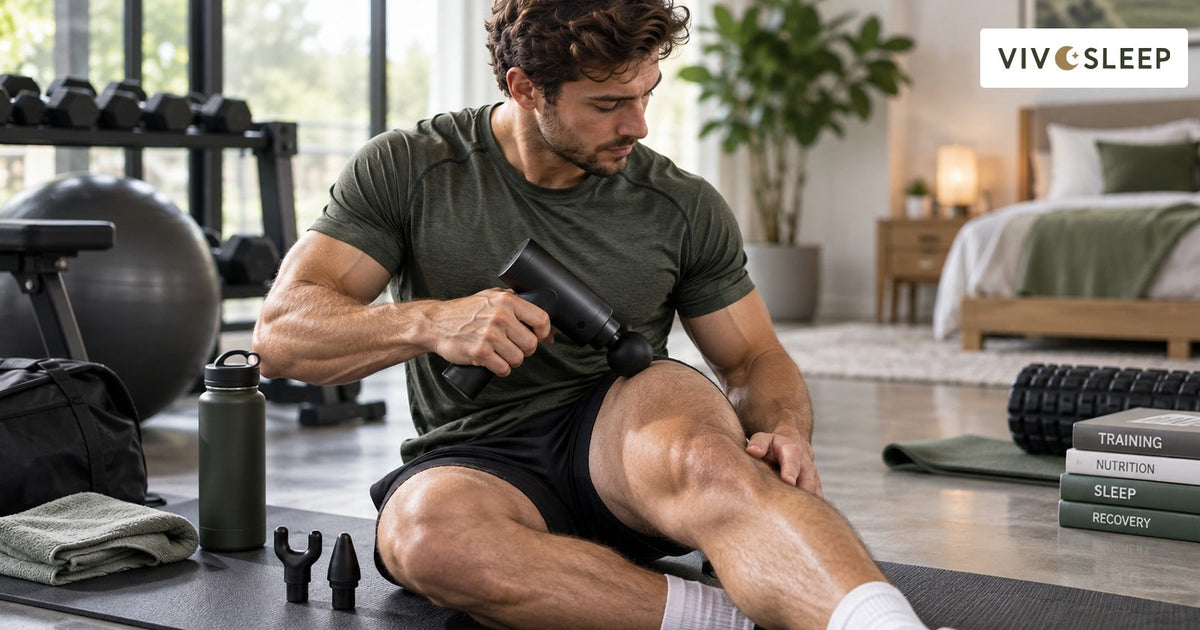
Good technique starts before the massage gun touches your body. Attachment choice, speed, posture, and grip all affect how easy the device is to control.
| Setup Step | What to Do |
| Choose the Right Attachment | Start with a soft ball or flat head for the upper traps and shoulders. Avoid pointed attachments near the necp> |
| Use the Lowest Speed | Begin at the lowest comfortable setting. Increase only if the muscle feels comfortable and controlled. |
| Relax Your Shoulders | Sit or stand comfortably and let your shoulders drop naturally. Avoid shrugging during use. |
| Keep a Light Grip | Hold the massage gun securely without squeezing or pressing hard into the muscle. |
| Test Before Continuing | Try the device on a broad shoulder muscle first. Stop if you feel pain, numbness, unusual sensitivity,instability. |
How Do You Use a Massage Gun on Your Upper Traps and Shoulders?

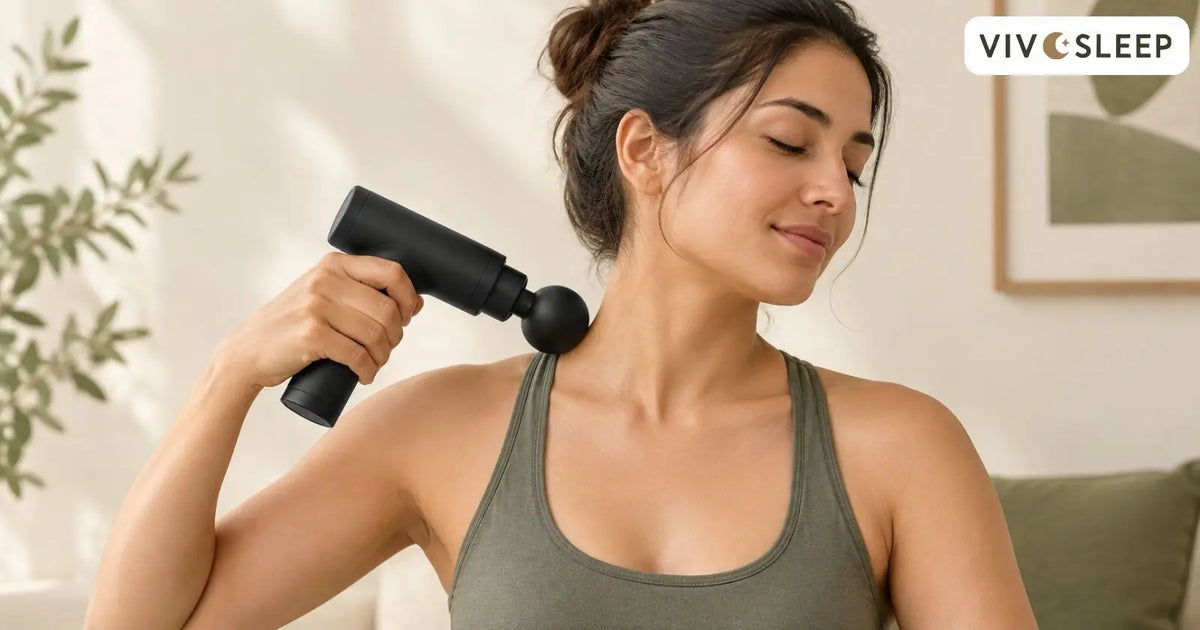
The technique should feel controlled rather than aggressive. Move gradually across the upper traps, rear shoulder, and upper back while keeping away from the neck itself.
Sit Upright and Let the Shoulder Drop
Sit or stand comfortably with your head in a neutral position. Let the shoulder you are working on relax downward. Avoid shrugging or twisting your neck to create access. If one-handed use feels awkward, change position rather than forcing your wrist or shoulder.
Start the Device Before Touching the Muscle
Turn the massage gun on before placing it against your shoulder. This reduces the chance of an abrupt impact when the device starts. Begin with the lowest speed.
Glide Slowly Across the Upper Trap
Place the attachment on the thicker part of the upper trapezius near the shoulder. Move slowly across the muscle. Avoid drifting inward toward the side of the neck. Do not press downward aggressively. Let the percussion head maintain gentle contact.
Move Toward the Shoulder Muscle
Continue outward across the shoulder. The deltoid and rear shoulder provide broader areas where controlled percussion is easier. Move in smooth passes rather than repeatedly bouncing over one location.
Work Around the Shoulder Blade
Move toward the upper-back muscles surrounding the shoulder blade. Stay on the soft tissue and leave space around the actual edge of the shoulder blade. Avoid crossing directly over the spine.
Move the Arm Gently Afterward
After finishing, put the massage gun down and move the shoulder gently. Try several slow shoulder rolls or easy arm movements. This can help you check how the area feels after the session.
Expert Insight: Focus on controlled movement rather than finding one painful spot and pressing harder into it.
How Long Should You Use a Massage Gun on Your Neck and Shoulders?
Make the first few sessions brief. For the upper traps and shoulders, 30-60 seconds per muscle area is a good starting point. The aim is not to use the device for as long as possible but to observe the reaction of the muscles to it.
Start With Short Passes
Use the massage gun for a short time on one muscle group and then take the time to assess the area. Stop if the muscle becomes more tender or uncomfortable, do not add more time.
Spend More Time on the Shoulders
The shoulders and upper traps give you more soft tissue to work with. Areas closer to the neck should get shorter, lighter passes because they sit near more sensitive structures.
Keep the Massage Gun Moving
Move the device slowly across the muscle instead of holding it in one place. This helps spread the percussion and lowers the chance of drifting onto bone or another sensitive area.
Avoid Staying on Tender Spots
If one area feels sore, do not press harder or hold the device there longer. Use light passes around the spot or leave it alone if it feels uncomfortable.
Pause and Check How You Feel
After each pass, move the shoulder gently and notice how the muscle feels. There is no single massage-gun duration that suits everyone, so follow your device instructions and increase time only when the area remains comfortable.
| Area | Conservative Starting Time | Speed |
| Upper trap | 30–60 seconds per side | Low |
| Shoulder | 30–90 seconds | Low to medium |
| Upper back | 30–60 seconds | Low |
| Neck-adjacent muscle | Keep brief | Low |
| Tender point | Do not remain stationary | Low |
Consider: Longer sessions are not automatically more useful. Short, controlled passes make it easier to monitor how your muscles respond.
Massage Gun, Stretching, Heat, or Neck Stretcher: Which Should You Use?
These options work differently and should not be treated as interchangeable treatments.
| Option | How It May Help | Best Used For | Key Limitation |
| Massage Gun | Uses rapid percussion on soft muscle tissue to support general muscle comfort. | Shoulders and upper back after sitting, activity, or exercise. | Avoid direct use on sensitive neck structures. |
| Gentle Stretching | Supports comfortable movement and mobility when an area feels stiff. | Mild stiffness and everyday mobility routines. | Do not force the neck beyond a comfortable range. |
| Heat | Warmth may help tight or stiff muscles feel more comfortable. | General muscle stiffness and relaxation. | Use according to safety guidance; it may not suit every situation. |
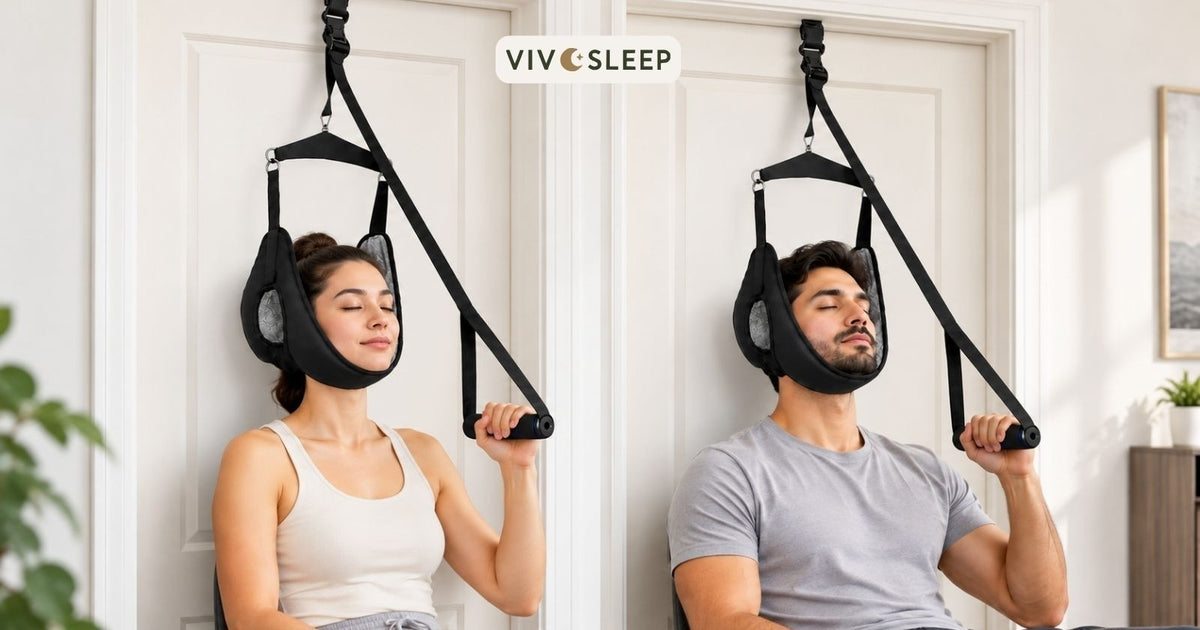
| Cervical Neck Stretcher | Uses controlled traction rather than percussion for a different type of neck support. | At-home traction routines when used as directed. | Requires correct setup and careful use. |
| Clinician Assessment | Helps identify the cause of persistent or worsening symptoms. | Radiating pain, numbness, weakness, or ongoing discomfort. | Home wellness tools should not replace professional evaluation. |
Consider: A cervical neck stretcher uses traction rather than percussion. It is therefore a different type of home wellness tool. Remember to use the device according to its instructions and not believe that traction and massage are equal.
Final Verdict: Use a Massage Gun Around the Neck, Not on the Neck
With proper usage, a massage gun can be used for a general shoulder and upper-body recovery routine. Maintain it on the upper traps, shoulders, rear shoulder muscles, and soft upper back areas. Apply low speed, light pressure, and slow speed.
Do not use a massage gun on the front and sides of the neck, cervical spine, throat, base of the skull, or any bony area. Most importantly, never push any abnormal symptoms through with percussion. Persistent pain, numbness, weakness, radiating symptoms, or dizziness deserve professional assessment.