Neck Pain and Sleep Quality: Why They Affect Each Other and How to Build a Better Nighttime Routine

Neck pain can make it hard to settle in, stay asleep, or find a position that feels right. The good news is that small changes to your pillow, bedtime routine, movement, and daytime posture may make nights more comfortable. Because neck pain and poor sleep can feed into each other, improving either one may help interrupt the cycle.
The Sleep–Pain Cycle
Research increasingly describes sleep problems and chronic musculoskeletal pain as a two-way relationship. Pain can make it harder to fall asleep, stay asleep, and find a comfortable position. At the same time, poor sleep may increase the likelihood or persistence of pain and can make the nervous system more sensitive to discomfort. A 2024 systematic review found that sleep problems were associated with a higher risk of later chronic musculoskeletal pain, while pain also appeared to increase the risk of sleep problems.[1]
This does not mean one bad night causes chronic pain. It means sleep quality is a meaningful part of the recovery picture, not an unrelated side issue. Improving sleep may not remove the original cause of neck pain, but it can support better coping, energy, movement, and consistency with a rehabilitation plan.
Why Neck Pain Often Feels Worse at Night
Neck pain may feel worse at night for several reasons, including sleep position, pillow fit, tension from the day, and a nervous system made more sensitive by poor sleep.
You Stay in One Position Longer
During the day, the neck constantly changes position. In bed, the same tissues may stay compressed or stretched for longer periods. A pillow that is too high, too low, too firm, or too soft can become more noticeable after several hours than it does during the first few minutes.
The Neck Is Carrying the Day’s Tension
Screen time, driving, stress, lifting, and sustained posture can leave the neck and shoulders tense by bedtime. If there is no transition between the workday and sleep, the body may enter bed still braced and alert.
Pain Draws Attention in a Quiet Room
During the day, activity and distraction compete with pain signals. At night, discomfort can feel more prominent because there is less competing input and more attention on the body.
The Pillow Does Not Match the Sleep Position
A side sleeper usually needs enough pillow height to fill the space between the mattress and the side of the head. A back sleeper often needs a lower profile that supports the natural curve of the neck without pushing the head forward. Stomach sleeping requires the head to remain turned for long periods and may increase strain for some people.[2]
Stress and Poor Sleep Increase Muscle Guarding
When the nervous system is stressed or sleep deprived, the jaw, shoulders, and neck may remain more tense. Teeth grinding, clenching, and restless sleep can add to morning symptoms.

The Best Sleep Positions for Neck Comfort
There is no single best sleep position for everyone. What matters is keeping your head supported without forcing your neck to tilt or turn for hours.
Side Sleeping
Side sleeping can be comfortable when the head stays level instead of tilting toward the mattress or ceiling. The pillow should fill the space created by the shoulder. A pillow between the knees may help keep the rest of the spine more relaxed. Keep the chin in a neutral position rather than curling tightly toward the chest.
Back Sleeping
Back sleeping allows the head and neck to stay centered for many people. Choose a pillow that supports the neck without pushing the head forward. A small pillow under the knees can reduce tension through the lower back and may make the overall position easier to maintain.[3]
Stomach Sleeping
Stomach sleeping keeps the head rotated to one side and can increase neck strain. If changing positions is difficult, experiment gradually. A very thin head pillow—or no head pillow if comfortable—may reduce the degree of neck rotation, but individual needs vary. Anyone with significant pain should ask a clinician for personalized advice.
How to Tell Whether Your Pillow Is Helping
A pillow should feel comfortable when you lie down and should still support you after hours of sleep. Signs that the fit may be wrong include:
- Waking with the head tilted noticeably toward one shoulder
- Feeling that the chin is pushed toward the chest on your back
- Needing to place an arm under the pillow to create more height
- Repeatedly folding or bunching the pillow during the night
- Pain that is strongest on waking and improves after moving
- Numbness or tingling that appears mainly in one sleep position
Pillow research suggests that design and height can influence neck pain and waking symptoms, but there is no single material or shape that works for everyone.[4] Your shoulder width, mattress firmness, body size, and sleep position all affect the ideal height.
A 15-Minute Nighttime Neck-Recovery Routine
This 15 minute routine can help you leave some of the day’s tension behind before getting into bed.
Minutes 0–3: Change the Environment
Dim the lights, put the phone out of reach, and set the room temperature for comfort. This helps separate recovery time from the posture and stimulation of the workday. If your phone is your alarm, place it across the room rather than beside the pillow.
Minutes 3–6: Slow the Breathing
Sit or lie comfortably and breathe slowly without forcing the breath. Let the shoulders soften on each exhale. The goal is not a special breathing ratio; it is to reduce bracing and notice whether the jaw, tongue, and shoulders are holding unnecessary tension.
Minutes 6–10: Gentle Mobility
Perform five slow chin tucks, five comfortable head turns per side, and eight shoulder rolls. Keep the range small and smooth. If turning the head is painful, skip that movement and consult a professional if the limitation persists.
Minutes 10–13: Upper-Back Reset
Do eight gentle shoulder-blade squeezes and a mild doorway chest stretch for 20 seconds. The upper back and chest influence how easily the head can rest over the torso, so the routine should not focus only on the neck.
Minutes 13–15: Set Up the Sleep Position
Arrange the pillow before becoming sleepy. Side sleepers can check that the nose is roughly in line with the center of the chest. Back sleepers can check that the chin is not forced downward. Add a pillow between the knees or under the knees if it improves overall comfort.

Where Heat, Massage, and Traction May Fit
Heat, massage, and traction can each play a different role. Start gently and pay attention to how your neck responds.
Heat
A warm shower or brief use of a comfortably warm—not hot—heating pad may help some people relax tight muscles. Protect the skin, follow product directions, and avoid falling asleep on an electric heating pad. Heat is not appropriate for every injury, especially when there is new swelling or uncertainty about the cause.
Massage
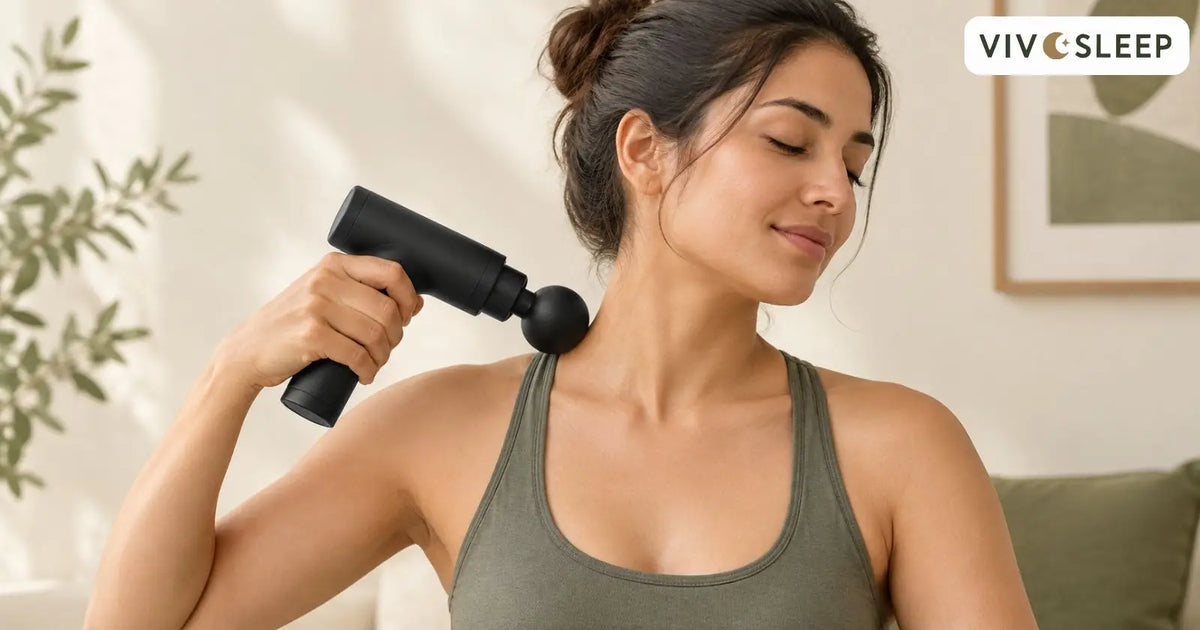
Gentle massage around the upper shoulders and upper back may feel relaxing. Avoid pressing directly over the front or sides of the neck, and do not use aggressive percussion near the cervical spine. Stop if massage increases headache, dizziness, tingling, or pain.
Cervical Traction
Controlled cervical traction creates a gentle stretching force through the neck and may help some people reduce stiffness, improve mobility, and feel less compressed. It can fit naturally into a broader neck-care routine alongside comfortable pillow support, posture changes, gentle movement, and strengthening. The most useful approach is steady and conservative: follow the device instructions, use only a comfortable level of traction, and judge the routine by how your neck responds afterward rather than assuming more force or more time is better.[6]

Morning Habits That Can Reduce the Next Night’s Tension
Nighttime comfort is shaped by what happens during the day. A few simple habits can reduce the amount of tension carried into bed:
- Raise phones and screens instead of repeatedly dropping the head
- Take brief movement breaks during desk work
- Support the forearms so the shoulders can relax
- Avoid carrying heavy bags on one side
- Include regular walking and upper-back strengthening
- Notice jaw clenching and let the teeth separate when resting
- Keep a consistent wake time to support a more stable sleep schedule
The most effective plan usually combines a better sleep setup with fewer aggravating positions during the day. A perfect pillow cannot fully offset ten hours of sustained forward-head posture.
When to Seek Medical Care
Seek urgent care for severe neck pain after a collision, fall, or other trauma, or when pain occurs with weakness, numbness, difficulty walking, loss of coordination, fever, or a severe headache. Schedule a medical evaluation when pain lasts longer than a few weeks, repeatedly interrupts sleep, radiates into an arm, or makes normal activities difficult.[5]
Frequently Asked Questions
Here are answers to a few common questions about pillows, sleep position, and traction.
Can a bad pillow cause neck pain?
A pillow that places the neck in an uncomfortable angle for hours can contribute to morning pain or stiffness. It may not be the only cause, especially when symptoms also build during the day.
Is side or back sleeping better for neck pain?
Both can work. The important factor is alignment and comfort. Stomach sleeping is more likely to hold the neck rotated for long periods.
Should my shoulders be on the pillow?
Usually the head and neck should be supported while the shoulders remain mostly on the mattress. Pulling the pillow too far under the shoulders can raise the upper body and change neck alignment.
Why does my neck hurt more after a poor night of sleep?
Poor sleep can increase pain sensitivity, reduce recovery, and increase muscle tension. Pain can also fragment sleep, creating a cycle that may continue until both the sleep setup and the pain source are addressed.
Is traction better in the morning or at night?
Either can work. Many people prefer evening because traction fits naturally after gentle mobility and before setting up a comfortable sleep position, while others prefer morning. Consistent, controlled use and your individual response matter more than the clock time. Follow the product instructions and any clinician guidance.
Sources and Further Reading
- The bidirectional relationship between sleep problems and chronic musculoskeletal pain: A systematic review with meta-analysis — PubMed
- How to choose the best sleeping position for neck pain — Sleep Foundation
- Sleeping positions that reduce back pain — Mayo Clinic
- The effects of pillow designs on neck pain, waking symptoms, neck disability, sleep quality and spinal alignment — PubMed
- Neck pain: When to see a doctor — Mayo Clinic
- Restoring cervical lordosis by cervical extension traction methods: a systematic review — PubMed Central
Last reviewed August 12, 2026. This article is based on the clinical and research sources listed above.